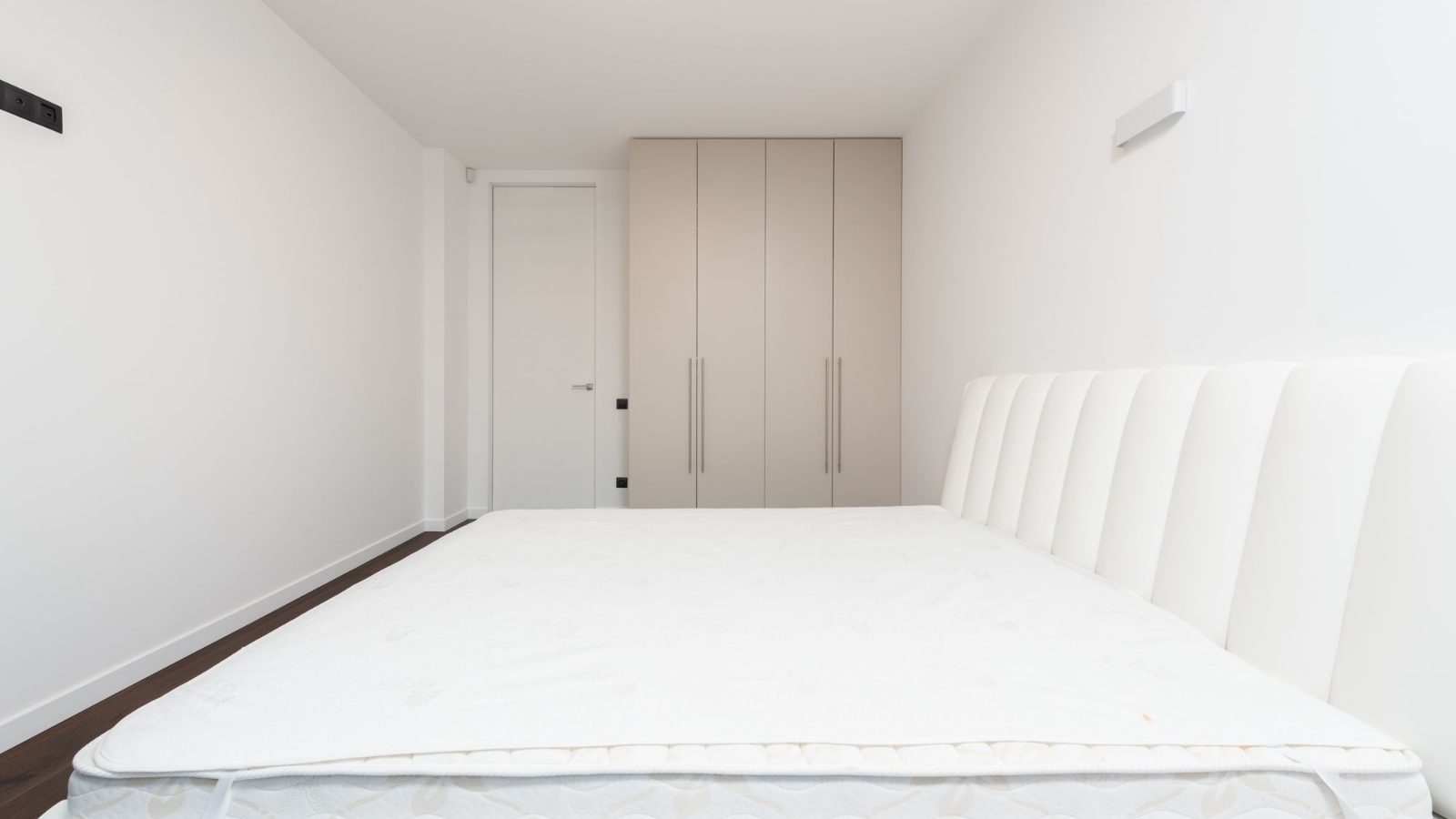
Quick answer: To clean a mattress, strip the bed, vacuum the whole surface, spot treat stains with a mild cleaner, then sprinkle baking soda over the top and let it sit for several hours before vacuuming it up. Use as little liquid as possible, blot instead of rubbing, and let the mattress dry completely before you put sheets back on.
You spend roughly a third of your life on your mattress, and unlike your sheets, it never goes in the washer. The good news is that a full clean takes about 30 minutes of hands-on work, and most of the supplies are already in your kitchen.
Updated October 2026
Key takeaways
- Vacuum first, spot clean second, deodorize with baking soda last.
- Always blot stains with a barely damp cloth; soaking a mattress can lead to mildew inside the foam.
- Match the cleaner to the stain: cold water for blood, an enzyme cleaner or vinegar solution for urine, a peroxide paste for yellow sweat stains.
- Never mix bleach with ammonia or vinegar, and do not combine peroxide and vinegar in the same bottle.
- Clean your mattress every 3 to 6 months and use a washable protector to make the job easier.
What do you need to clean a mattress?
- A vacuum with an upholstery attachment (a clean brush head works well)
- Baking soda, about 1 cup for a queen
- Clear liquid dish soap
- Hydrogen peroxide (3 percent, the standard drugstore strength)
- Distilled white vinegar
- An enzyme cleaner made for pet or protein stains (optional but useful)
- White microfiber cloths or white towels (colored cloths can transfer dye)
- A spray bottle and a soft brush
- Rubber gloves
Before you use anything new, check the care tag. Some memory foam and latex mattresses list specific cleaning limits, and following them protects your warranty.
How do you deep clean a mattress step by step?
- Strip the bed. Remove all sheets, pillowcases, mattress pads and protectors. Start them in the washer on the hottest setting the fabric allows. If you are not sure how often bedding should go through the wash, our guide on how often you should wash your sheets lays it out.
- Vacuum the entire mattress. Go slowly across the top, the sides and along the seams and tufts, where dust and skin cells collect. Take about 5 minutes per side.
- Spot treat stains. Use the method for each stain type below. Work from the outside of the stain toward the center so it does not spread.
- Deodorize. Once spot-treated areas are only slightly damp, sift a thin, even layer of baking soda over the whole surface. For extra freshness, mix a few drops of essential oil into the baking soda first.
- Wait. Leave the baking soda for at least 4 hours. Overnight is better if you have somewhere else to sleep. Open the curtains, because sunlight and fresh air help.
- Vacuum again. Remove every bit of baking soda, using the upholstery tool along the seams.
- Flip or rotate. If your mattress is two-sided, flip it and repeat. If it is one-sided, rotate it head to foot to even out wear.
- Make the bed only when the mattress is fully dry to the touch.
Amelia’s tip: Put the baking soda in a fine mesh strainer and tap it over the mattress. You get a thin, even layer, use less product and have much less to vacuum up afterward.
How do you remove different stains from a mattress?
The biggest mistake is using too much liquid. Mattresses dry slowly from the inside, so trapped moisture can turn into mildew and odor. Dampen your cloth, do not drench the mattress.
| Stain | Best cleaner | Avoid |
|---|---|---|
| Fresh blood | Cold water, then a little dish soap or hydrogen peroxide | Hot water, which sets the stain |
| Urine (people or pets) | Enzyme cleaner, or a 1 to 1 vinegar and water spray followed by baking soda | Ammonia-based cleaners, which can smell like urine to pets |
| Yellow sweat stains | Paste of hydrogen peroxide, baking soda and a drop of dish soap | Chlorine bleach |
| Vomit | Scrape, blot, then enzyme cleaner and baking soda | Scrubbing hard, which pushes it deeper |
| Coffee, tea or juice | Dish soap and cool water, then a vinegar solution if needed | Rubbing, which spreads the stain |
| Mystery stains | Start with mild dish soap and cool water | Strong chemicals before a spot test |
How to remove blood stains
- Blot up as much as you can with a dry white cloth.
- Dampen a clean cloth with cold water and blot from the edges inward.
- If a mark remains, dab on a small amount of 3 percent hydrogen peroxide. It will foam. Let it work for 5 minutes, then blot.
- Repeat as needed, then blot with a cloth dampened in plain cold water to rinse.
Hydrogen peroxide can lighten some fabrics, so test it first on a hidden spot, such as the side near the foot of the bed.
How to remove urine stains and smell
- Blot fresh urine right away with dry towels, pressing firmly to pull liquid up from the layers below.
- Spray an enzyme cleaner and follow the label for wait time. Enzymes break down the proteins that cause lingering odor.
- No enzyme cleaner? Lightly mist a mix of equal parts white vinegar and water. Let it sit 10 minutes and blot.
- Cover the spot with a thick layer of baking soda and leave it for 8 hours or overnight.
- Vacuum the dried baking soda. Repeat if you can still smell anything.
How to remove yellow sweat stains
- Mix 3 tablespoons of baking soda, 1 tablespoon of hydrogen peroxide and 1 drop of dish soap into a paste.
- Spread a thin layer over the stain with a soft brush or your gloved fingers.
- Let it dry for about 30 minutes, until it turns crusty.
- Vacuum or brush off the dried paste, then blot with a damp cloth.
Mix this paste fresh each time and throw away leftovers. Peroxide loses strength once it is exposed to light and air.
Amelia’s tip: Never mix bleach with ammonia or vinegar, and do not combine hydrogen peroxide and vinegar in the same container. Use one product, blot it out, then switch. Wear gloves and keep a window open while you work.
How do you get a mattress to dry faster?
A mattress that stays damp is a mattress that starts to smell. These steps speed up drying:
- Open windows or run a fan pointed at the damp area.
- Run a dehumidifier in the bedroom if you have one.
- Press a dry towel firmly over wet spots to pull out more moisture.
- Stand the mattress on its side if it is safe to do so, so air reaches both faces.
- Give it at least 8 hours, and longer for thick foam, before adding bedding.
Skip the hair dryer on high heat. It can damage foam and some fabrics, and it only dries the surface.
How often should you clean your mattress?
| Task | How often |
|---|---|
| Wash sheets and pillowcases | Weekly |
| Wash mattress protector | Every 1 to 2 months, and after any spill |
| Vacuum mattress | Monthly or when you change the season |
| Full deep clean with baking soda | Every 3 to 6 months |
| Rotate or flip | Every 3 to 6 months, per the care tag |
Adding mattress care to your seasonal list is easier when everything lives in one plan. The complete home cleaning schedule shows where it fits alongside the rest of the house.
How do you keep a mattress clean longer?
- Use a washable, waterproof protector. It is the single best thing you can do. It catches sweat and spills before they reach the mattress.
- Keep food and drinks out of bed, or at least keep them on a tray.
- Shower before bed if you can. Less body oil and sweat means fewer yellow stains.
- Let it breathe. Pull back the covers for 20 to 30 minutes in the morning before making the bed so moisture can escape.
- Keep pets on their own bed, or wash the protector more often if they sleep with you.
- Clear the space under the bed. Dust bunnies under the frame end up back on the mattress. A quick pass through our 30 day decluttering plan makes it easier to vacuum there regularly.
When should you replace a mattress instead of cleaning it?
Cleaning can freshen a mattress, but it cannot fix one that is worn out. Consider replacing it if you notice any of these:
- Visible sagging or body impressions that do not bounce back
- Mold or mildew spots, or a musty smell that returns after cleaning
- Signs of bed bugs that a professional cannot resolve
- Waking up stiff or sore more often than when the mattress was new
Many mattresses last somewhere around 7 to 10 years, though it varies a lot by material and how the bed is used.
Amelia’s picks for this project
- Bissell Little Green Portable Carpet CleanerA compact spot cleaner for upholstery, mattresses, stairs and car seats.
- BEDLORE Waterproof Mattress ProtectorA washable barrier that keeps spills, sweat and stains out of your mattress.
- Glass Spray Bottles for Homemade CleanersReusable bottles for vinegar, citrus or diluted castile soap sprays.
As an Amazon Associate, Amelia Jay earns from qualifying purchases. See all of Amelia’s picks
Frequently asked questions
Can you clean a mattress with just baking soda?
Baking soda is great for deodorizing and absorbing light moisture, but it will not lift most stains on its own. Vacuum first, spot treat stains with a mild cleaner, then use baking soda as the final step. Leave it for at least 4 hours for the best results.
How do you get old stains out of a mattress?
Older stains usually need a few rounds. A paste of hydrogen peroxide, baking soda and a drop of dish soap works well on yellowed and set-in stains. Test it on a hidden spot first, let it dry, vacuum it off and repeat as needed.
Can I use a carpet cleaner or steam cleaner on my mattress?
Some people use an upholstery attachment, but these machines add a lot of moisture, which can soak deep into foam and lead to mildew. If you try it, use the lowest water setting, extract as much as possible and dry the mattress thoroughly. Check your mattress care tag first, since some manufacturers advise against it.
How long does a mattress take to dry after cleaning?
A lightly spot-cleaned area usually dries in 2 to 4 hours with good airflow. Larger treated areas or thick foam can take 8 hours or more. Use fans, open windows and a dehumidifier to speed it up, and wait until it is fully dry before adding sheets.
Does vinegar remove urine smell from a mattress?
A spray of equal parts white vinegar and water helps neutralize urine odor, especially when you follow it with baking soda left on overnight. For pet accidents or older smells, an enzyme cleaner is usually more effective. Never mix vinegar with bleach.
A clean mattress makes your whole bedroom feel fresher, and with a good protector in place, you may only need to do the full routine a couple of times a year. Pair it with fresh bedding and a clutter-free bedroom, and bedtime gets a lot more inviting.