Quick answer: The cheapest ways to make a living room look expensive are to declutter, paint in a soft neutral, hang curtains high and wide, swap in warm bulbs, and add one oversized piece like a large rug, mirror or piece of art. Most of these changes cost under $100 each, and together they can make an ordinary room feel calm, layered and custom.
An expensive-looking living room is mostly about scale, light and restraint, not price tags. Here are 15 changes that give you the most polish per dollar, in roughly the order you should tackle them.
Updated October 2026
Key takeaways
- Clearing clutter and editing accessories is free and makes the biggest visual difference.
- Scale matters: a rug that is too small or curtains hung too low make a room look cheap fast.
- Layered, warm lighting (three or more light sources) is what makes rooms look high end in the evening.
- Small hardware and textile swaps (pillow covers, outlet plates, lampshades) cost little and read as custom.
- Spend on one or two anchor pieces and save on everything else.
What makes a living room look expensive?
Rooms that look expensive share a few traits: a limited color palette, furniture that is scaled to the space, lots of soft light, and a sense that every object was chosen on purpose. None of those require a big budget.
What makes a room look cheap is usually the opposite: too many small things, harsh overhead light, undersized rugs and art, and mismatched finishes. Fixing those is where your money and effort go furthest. If you want the bigger picture on where to spend first across your whole house, our guide to budget home upgrades that add the most value walks through it room by room.
15 cheap ways to make your living room look expensive
1. Declutter and edit your surfaces
This is free, and it does more than any purchase. Clear the coffee table, side tables and shelves completely, then put back only what you love or use.
A good rule: group accessories in odd numbers (one, three or five) and leave about a third of every shelf empty. Negative space is what makes styled rooms look intentional. If the clutter runs deeper than one room, try our 30 day decluttering plan.
2. Paint the walls a warm, soft neutral
Fresh paint is the single best value upgrade for most living rooms. Soft whites, warm greiges, mushroom tones and muted greens tend to look more refined than stark white or very saturated colors.
Choose an eggshell or matte finish for walls, since high shine shows every bump. Doing it yourself usually costs the price of paint and supplies. See our breakdown of how much it costs to paint a room for DIY and pro price ranges.
3. Hang curtains high and wide
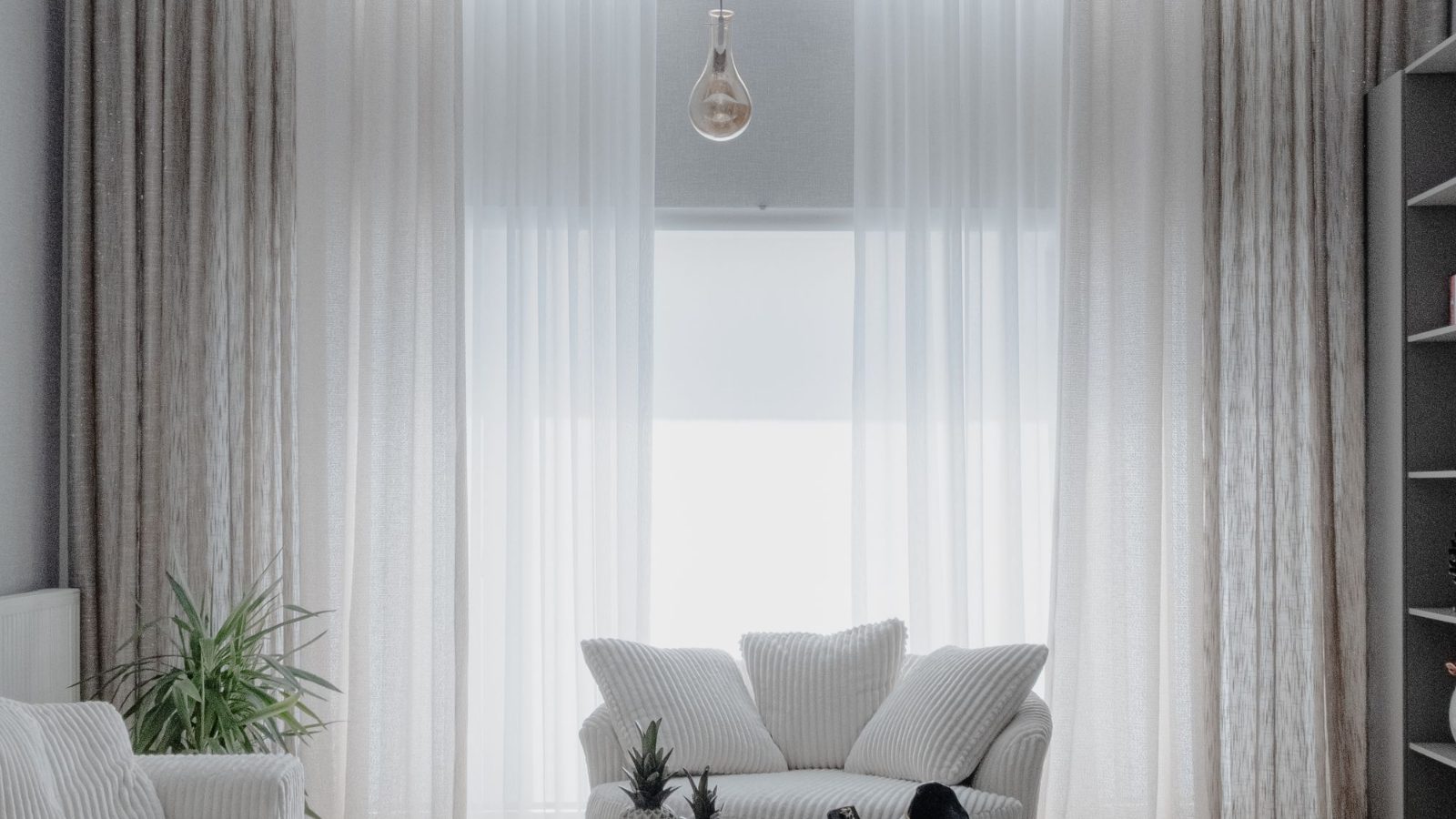
Mount the curtain rod 4 to 6 inches below the ceiling (or halfway between the window frame and ceiling) and extend it 8 to 12 inches past each side of the window. This makes windows look bigger and ceilings look taller.
Panels should just kiss the floor. Short curtains that stop mid-wall are one of the most common budget giveaways.
4. Buy a bigger rug than you think you need
An undersized rug makes furniture look like it is floating. In most living rooms, an 8 by 10 foot rug works better than a 5 by 7, and at minimum the front legs of every seating piece should rest on it.
If a large rug is out of budget, buy an inexpensive natural jute or sisal rug in the right size and layer a smaller patterned rug on top.
5. Swap your light bulbs for warm white
Cool, bluish bulbs make a room feel like an office. Look for bulbs labeled 2700K, often sold as “soft white” or “warm white,” for living spaces.
Use the same color temperature in every fixture in the room so the light looks consistent. This costs a few dollars per bulb and changes the mood immediately.
6. Add layers of light
Expensive rooms rarely rely on one ceiling fixture. Aim for at least three light sources at different heights: a floor lamp, a table lamp or two, and something low like a small accent lamp on a shelf.
Put lamps on plug-in dimmers or smart plugs so you can lower them in the evening. Soft pools of light are what make rooms look cozy and high end at night.
7. Upgrade your lampshades
A dated or yellowed shade can make a nice lamp base look cheap. Replacing it with a crisp linen drum or a pleated shade is an inexpensive refresh.
Measure your harp and base before shopping. A good guide: the shade should be about two thirds the height of the base and wider than the widest part of the lamp.
8. Hang one large mirror or piece of art
One oversized piece looks far more expensive than a cluster of small frames. Over a sofa, art or a mirror should be about two thirds the width of the sofa.
A large mirror also bounces light around the room. Hang the center of art at roughly 57 to 60 inches from the floor, or 8 to 10 inches above the back of a sofa.
9. Refresh throw pillows with new covers
You do not need new pillows, just new covers. Buy covers one size larger than your inserts (for example, a 20 inch cover on a 22 inch insert) so they look full and plump.
Stick to two or three colors and mix textures like linen, boucle, velvet and knit. Feather or down-alternative inserts give that soft “karate chop” look that reads as luxury.
10. Add a throw blanket with real texture
A chunky knit or soft woven throw draped loosely over the arm of a sofa or chair adds warmth and depth. Choose a color pulled from your rug or art so it ties the room together.
11. Swap outlet covers, switch plates and vent covers
Yellowed plastic plates and rusty vents quietly cheapen a room. New screwless plates or simple metal covers cost a few dollars each and look custom.
Always turn off the breaker before removing a switch plate if you will be near exposed wiring.
12. Bring in real or high quality faux greenery
One large plant in a corner (a fiddle leaf fig, olive tree or snake plant, for example) adds height and life. Put it in a substantial pot or basket rather than the plastic nursery pot.
If you go faux, choose one realistic large plant over several small, shiny ones.
13. Style your bookshelves like a designer
Mix books stacked horizontally and vertically, add a few objects (a bowl, a vase, a small sculpture) and leave breathing room. Removing bright book jackets or turning some spines inward can calm a busy shelf.
14. Paint or replace dated hardware and fixtures
A brass or brushed nickel finish that looks dated can be refreshed with a matte black or warm metallic spray paint made for metal. Work outside, wear a mask, and use thin coats.
Keep metal finishes to two at most in one room so it looks deliberate rather than random.
15. Add crown molding, picture frame molding or a slipcover
Architectural details read as expensive. Peel-and-stick or lightweight foam molding, applied as boxes on a wall and painted the wall color, adds instant character for a modest cost.
If your sofa is worn but comfortable, a fitted slipcover in a neutral fabric can make it look new. Renting? Check our tips on updating a rental without losing your deposit before you nail anything to the wall.
Amelia’s tip: Take a photo of your room on your phone and look at it in black and white. Clutter, awkward scale and too many colors jump out instantly, which makes it much easier to decide what to remove or move.
How much do these upgrades cost?
Prices vary by region and store, but here are typical ranges so you can plan. Many of the best changes are free or nearly free.
| Upgrade | Typical cost | Impact |
|---|---|---|
| Declutter and restyle surfaces | Free | High |
| Warm white bulbs | $2 to $8 per bulb | High |
| New pillow covers (set of 4) | $30 to $80 | Medium |
| Outlet and switch plates | $2 to $10 each | Medium |
| Curtain rod and panels | $50 to $150 per window | High |
| DIY paint for one room | $100 to $300 | High |
| Large jute rug (8 by 10) | $150 to $400 | High |
| Oversized mirror or art | $80 to $300 | High |
| Foam or peel-and-stick molding | $50 to $200 per wall | Medium |
Where should you splurge and where should you save?
Worth spending a little more on
- The rug: it sets the scale for the whole room and gets daily wear.
- Your sofa (eventually): it is the piece you touch most, so comfort and good construction matter.
- Lighting: one well made floor lamp can carry a room for years.
Easy places to save
- Accessories: thrift stores and discount home stores are full of vases, bowls and frames.
- Art: large prints, framed fabric or even a matted page from an old book can look gallery worthy.
- Side tables and baskets: these are easy to find secondhand and refinish.
How to pull it all together in one weekend
- Friday evening: clear every surface and remove anything that does not belong in the room.
- Saturday morning: rearrange furniture so seating faces each other and pulls in from the walls a few inches.
- Saturday afternoon: swap bulbs, hang curtains high and wide, and replace switch plates.
- Sunday: lay the rug, hang your large mirror or art, then add pillows, throw and greenery.
- Sunday evening: turn off the overhead light, switch on the lamps, and edit one last time.
Once the living room is done, the same principles work everywhere. Our room by room guide to organizing your whole home helps keep that calm look from slipping back into clutter.
Amelia’s picks for this project
- Plug-In Wall Sconces (set of 2)Designer-look lighting with no electrician needed, ideal for renters.
- evelor A19 LED Light Bulbs (6 pack)Warm, efficient bulbs that cut lighting costs and flatter every room.
- Amazon Basics Collapsible Fabric Storage CubesSoft bins that fit cube shelves and hide visual clutter in seconds.
As an Amazon Associate, Amelia Jay earns from qualifying purchases. See all of Amelia’s picks
Frequently asked questions
How can I make my living room look expensive on a budget?
Start with free changes: declutter, rearrange furniture and edit accessories. Then focus your money on paint, warm lighting, curtains hung high and wide, and a correctly sized rug. These give the most visual impact for the least money.
What colors make a room look expensive?
Soft, warm neutrals like creamy whites, greige, taupe and mushroom tend to look refined. Deep muted shades such as olive, navy or charcoal can also look rich when used on one wall or in a cozy room. Keeping the palette to three main colors helps the room feel cohesive.
What size rug should go in a living room?
In most living rooms, an 8 by 10 foot rug is the right size, and larger rooms may need a 9 by 12. At minimum, the front legs of the sofa and chairs should rest on the rug. A rug that is too small is one of the most common reasons a room looks cheap.
How high should curtains be hung?
Hang the rod 4 to 6 inches below the ceiling or halfway between the top of the window and the ceiling. Extend the rod 8 to 12 inches past each side of the window frame. The panels should just touch the floor.
What makes a living room look cheap?
Common culprits are clutter, harsh cool lighting, short curtains, undersized rugs and art, and too many mismatched finishes. Lots of small decorative items spread across every surface also make a room feel busy instead of styled.
You do not need a big budget to make your living room feel polished. Start with the free edits, add warm layered light, get the scale right, and let one or two anchor pieces do the heavy lifting.