Quick answer: To organize kids toys so they stay put, cut down the number of toys out at once, sort them into simple categories, and store each category in an open, labeled bin your child can reach. Rotate a portion of toys into storage every few weeks and build a five minute cleanup into the daily routine. The fewer steps it takes to put a toy away, the more likely it is to get put away.
If you have ever cleaned up the playroom only to find it buried again by lunch, the problem is probably not your kids. It is the system. Here is how to set up toy storage that children can actually use on their own.
Updated October 2026
Key takeaways
- Fewer toys out at once means faster cleanup and often more focused play.
- Sort by simple categories that make sense to your child, not to an adult.
- Use open, low bins with picture labels so kids can put toys away without help.
- Rotate toys every two to four weeks to keep things fresh without buying more.
- A short, consistent cleanup routine matters more than any storage product.
Why won’t my kids keep their toys organized?
Most toy systems are designed by adults for adults. Lids, high shelves, deep bins and vague categories all make cleanup harder for a small child.
Kids also struggle when there is simply too much. If a bin is overflowing, there is nowhere for anything to go back. The goal is a system so easy that a preschooler can follow it with a little reminding.
If clutter is a problem in every room, our room by room guide to organizing your whole home walks you through the bigger picture.
How do you organize kids toys step by step?
Plan for two to three hours for a typical playroom or bedroom. Do the first round of sorting without your kids if they tend to want to keep everything, then involve them in setting up the new system.
Step 1: Gather every toy in one place
Collect toys from the bedroom, living room, car and backyard. Seeing the full amount is usually eye-opening and helps you make clear decisions.
Step 2: Declutter
Set out four bags or boxes: Keep, Donate, Trash and Store. Then go through everything:
- Toss broken toys and puzzles or games with missing pieces.
- Donate toys your child has outgrown or ignored for months.
- Pick the keepers within each type (you probably do not need 40 stuffed animals or six toy cars that all do the same thing).
- Remove toys with small parts from areas used by children under three, and check toys for loose button batteries or magnets.
- Put sentimental items you want to save in a labeled memory box.
Our 30 day plan to declutter your home includes a toy day if you want to spread this out.
Step 3: Sort into kid-friendly categories
Keep categories broad and obvious. Good examples include:
- Building blocks and construction sets
- Cars, trucks and trains
- Dolls and figures
- Stuffed animals
- Art supplies
- Pretend play (kitchen, dress up, doctor kit)
- Puzzles and board games
- Books
Avoid tiny subcategories. “Blocks” works; “wooden blocks, foam blocks and magnetic tiles in separate bins” usually does not, at least for younger kids.
Step 4: Divide into “out now” and “rotation”
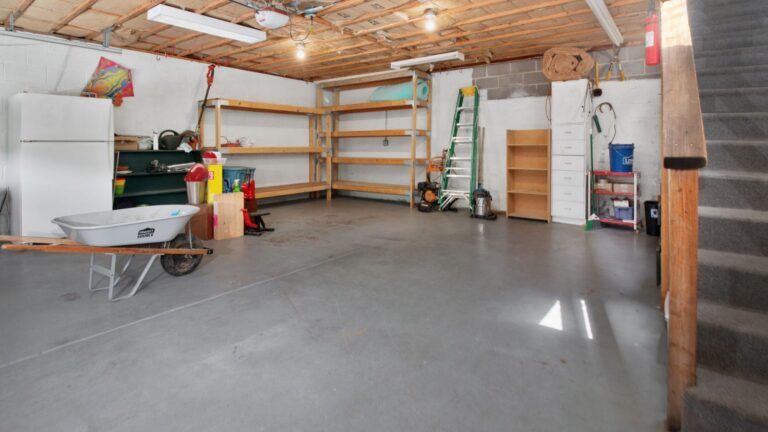
Choose about one third to one half of the toys to keep out. Pack the rest into labeled totes for your rotation stash in a closet, under a bed or in the garage.
Step 5: Set up storage your child can reach
Put everyday toys on low shelves and in open bins. Store messy or supervised items, such as paint, slime and toys with tiny pieces, up high where you control access.
Step 6: Label every bin
Use a picture label for pre-readers and a picture plus a word for early readers. You can print photos of the actual toys, draw simple icons or cut images from the toy packaging.
Amelia’s tip: Let your child help pick the bin for each category and stick on the labels. Kids are much more likely to keep up a system they helped create, and it turns cleanup into something they own.
What is the best toy storage by age?
What works for a toddler is different from what works for a nine year old. Use this as a starting point.
| Age | Best storage | Labels | Tips |
|---|---|---|---|
| 1 to 3 years | Low open baskets, a few large bins | Photos of the toys | Keep 8 to 12 toys out at a time; no lidded chests with heavy lids |
| 3 to 5 years | Cube shelves with fabric or plastic bins | Pictures plus simple words | One category per bin; a small art cart with supervised supplies |
| 6 to 8 years | Cube shelves, clear bins, a book ledge | Words, with pictures if helpful | Clear bins for sets with many pieces; a display shelf for finished builds |
| 9 to 12 years | Drawers, clear lidded boxes, under-bed bins | Words | Let them design their own system; add a desk area for hobbies |
What are the best toy storage ideas for small spaces?
You do not need a dedicated playroom. A few smart pieces can keep toys contained in a bedroom or living room.
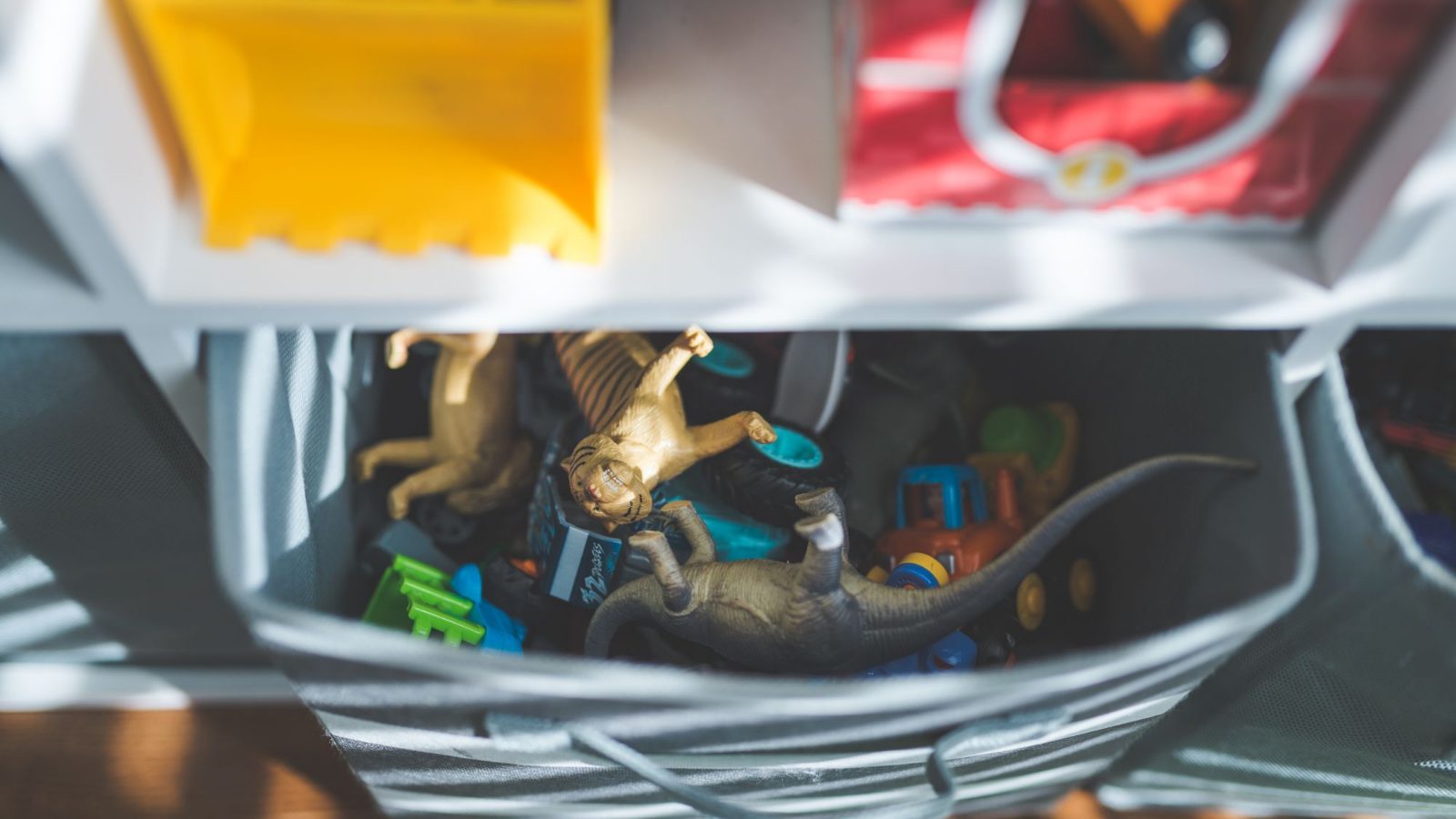
- Cube shelving: Inexpensive and flexible. Fabric bins hide clutter in shared living areas.
- Under-bed bins on wheels: Great for building sets, dress up or the rotation stash.
- Over-the-door shoe organizers: Clear pockets hold small dolls, cars and art supplies.
- Wall-mounted book ledges: Show book covers so kids can choose (and return) them easily.
- A storage ottoman or bench: Doubles as seating in the living room.
- Hanging net or hammock: Keeps a pile of stuffed animals off the floor.
Whatever you choose, anchor tall shelves and dressers to the wall to prevent tip-overs. Most furniture comes with an anti-tip kit, and they are inexpensive to buy separately. If you are renting, our guide to updating a rental without losing your deposit covers how to handle small wall anchors.
Many of the same budget tricks for clothes work for toys too. See our guide to organizing a closet on a budget for more ideas on bins and shelving.
How does toy rotation work?
Toy rotation means keeping only part of your child’s toys available and swapping them out on a regular schedule. Toys that come back after a few weeks often feel new again.
How to set up a simple rotation
- Split the stored toys into three or four totes, each with a mix of categories.
- Label each tote with a number.
- Every two to four weeks, swap one tote for the toys currently out.
- Keep favorites out permanently if your child asks for them daily.
- Use each swap as a chance to remove broken or outgrown toys.
Sample rotation schedule
| Weeks | Out in the play area | In storage |
|---|---|---|
| 1 to 3 | Favorites + Tote 1 | Totes 2, 3 |
| 4 to 6 | Favorites + Tote 2 | Totes 1, 3 |
| 7 to 9 | Favorites + Tote 3 | Totes 1, 2 |
| 10 and beyond | Start again with Tote 1 | Totes 2, 3 |
How do you get kids to clean up their toys?
A good system makes cleanup possible. A routine makes it happen.
- Pick consistent times. Before dinner and before bed work well for most families.
- Set a timer. Five to ten minutes feels manageable, and racing the timer can be fun.
- Give specific directions. “Put all the cars in the car bin” works better than “clean your room.”
- Clean up together at first. Model it, then gradually step back as they get the hang of it.
- Use the one out, one back rule. Before getting out a new bin, the last one goes back.
- Praise the effort. Notice what they did well instead of fixing it in front of them.
Fold the toy reset into your family’s regular routine. Our complete home cleaning schedule shows how quick daily resets keep the whole house under control.
Amelia’s tip: Keep a “parking lot” basket for half-finished builds or projects your child is not ready to take apart. It respects their work and keeps the floor clear, and the basket gets emptied once a week.
How do you stop toy clutter from coming back?
- Do a quick declutter before birthdays and holidays to make room for new gifts.
- Suggest experience gifts, books or art supplies to relatives who ask for ideas.
- Use a donation bin in a closet so outgrown toys have somewhere to go right away.
- Limit the number of bins per category. When a bin is full, something has to go before something new comes in.
Amelia’s picks for this project
- Best Choice Products 9-Cube Storage OrganizerA flexible cube shelf for toys, books, craft supplies or entryway gear.
- Amazon Basics Collapsible Fabric Storage CubesSoft bins that fit cube shelves and hide visual clutter in seconds.
- Brother P-touch PTD220 Label MakerClear labels help everyone in the house put things back where they belong.
As an Amazon Associate, Amelia Jay earns from qualifying purchases. See all of Amelia’s picks
Frequently asked questions
How many toys should a child have out at once?
There is no magic number, but many parents find that 8 to 12 toys or bins work well for toddlers and a bit more for older kids. The right amount is what your child can clean up in about five to ten minutes. Rotate the rest so nothing gets boring.
What is the best way to store toys with lots of small pieces?
Use clear bins or zip pouches so kids can see what is inside, and keep one set per container. Store sets with tiny pieces up high if you have children under three in the house. A large tray or mat for building makes cleanup faster.
Are toy boxes a good idea?
Large toy boxes tend to become a jumble where everything sinks to the bottom. Open bins sorted by category are usually easier for kids to use. If you do use a toy chest, choose one without a lid or with a lid support that keeps it from slamming shut.
How often should you declutter kids toys?
A light declutter every few months works for most families, with a bigger edit before birthdays and holidays. Toy rotation days are also a natural time to remove broken or outgrown items. Small, regular edits are easier than one huge purge.
How do I organize toys in a shared living room?
Choose storage that blends with your decor, such as cube shelves with fabric bins, baskets or a storage ottoman. Keep only a small selection of toys in the living room and the rest in the bedroom or rotation stash. A quick evening reset helps the room feel like yours again after bedtime.
A system your kids can run
Organizing kids toys is less about perfect containers and more about fewer toys, clear categories and a short daily routine. Start with one room this weekend, involve your kids in the labeling, and adjust as they grow. Once the toys are handled, the rest of your home will feel much easier to manage.