Quick answer: Easy meal planning for a busy family comes down to one 20 minute session a week: check your calendar, pick 5 to 6 dinners built from a short list of family favorites, and write one grocery list sorted by store section. Add a theme night or two, plan for leftovers, and do a little prep on the weekend so weeknight dinners take 30 minutes or less.
If 5 p.m. keeps sneaking up on you with no plan, you are not alone, and you do not need a complicated system to fix it. This guide walks you through a simple weekly method, a sample 7 day plan, a budget grocery list and the prep and storage habits that make it all stick.
Updated October 2026
Key takeaways
- Plan once a week, on the same day, in about 20 minutes. Consistency matters more than perfection.
- Start with your calendar, not recipes. Busy nights get the fastest meals.
- Build a rotation of 15 to 20 family favorites so you are never starting from scratch.
- Shop from one list organized by store section, and shop your pantry first to cut waste and cost.
- A 60 to 120 minute prep session on the weekend can cut weeknight cooking time roughly in half.
What is meal planning and why does it help busy families?
Meal planning simply means deciding what you will eat for the week before the week starts, then shopping and prepping to match. It can be as loose as “tacos Tuesday, pasta Wednesday” on a sticky note or as detailed as a full spreadsheet.
The payoff is practical. You make fewer last minute takeout runs, you buy only what you need, and you stop having the “what’s for dinner?” conversation every single night.
The real benefits you will notice first
- Less money spent. Most families find their grocery and takeout spending drops once they shop from a list and cook what they already bought.
- Less food waste. When every ingredient has a job, fewer bags of spinach turn to slime in the crisper drawer.
- Less stress. Decisions are made once, on a calm weekend afternoon, instead of when everyone is hungry.
- Better balance. Seeing the whole week at once makes it easier to work in vegetables, vary proteins and avoid five pasta nights in a row.
What meal planning is not
It is not cooking elaborate dinners every night or prepping 21 identical containers. It is not a diet. And it does not have to be rigid. Swapping Tuesday and Thursday is completely fine, as long as you have the ingredients on hand.
How do you start meal planning as a beginner?
Start small. Plan dinners only for the first two or three weeks. Once that feels easy, add breakfasts, lunches or snacks if you want to.
Here is the weekly method that works for most households. It takes about 20 minutes once you have done it a few times.
The 7 step weekly meal planning method
- Pick your planning day. Choose the same day every week, ideally one or two days before you shop. Many families like Saturday morning or Sunday afternoon.
- Check the calendar. Look at practices, late meetings, date nights and events. Mark each night as busy, normal or relaxed. Busy nights get 15 to 20 minute meals or leftovers.
- Shop your kitchen first. Open the fridge, freezer and pantry. Note what needs to be used soon, like half a bag of rice, a pound of ground turkey in the freezer or vegetables that are close to the end.
- Choose 5 to 6 dinners. Pull from your list of family favorites and build at least one or two meals around what you already have. Leave one night open for leftovers, takeout or “fend for yourself.”
- Plan your leftovers on purpose. Cook once, eat twice. A roast chicken on Sunday becomes chicken quesadillas on Tuesday. Extra taco meat becomes taco bowls for lunch.
- Write one grocery list by store section. Group items by produce, meat, dairy, pantry and frozen so you can move through the store once without backtracking.
- Post the plan where everyone can see it. A whiteboard on the fridge or a shared note on your phones keeps the whole family on the same page and cuts down on questions.
Amelia’s tip: Keep a running “wins” list on your phone. Every time a dinner gets eaten with zero complaints, add it. After a month you will have a rotation of 15 to 20 meals, and planning becomes a matter of picking from that list.
How many meals should you plan per week?
For most families, 5 to 6 planned dinners is the sweet spot. Planning all 7 often leads to waste because life happens: a friend invites you over, someone gets sick or everyone is too full from a late lunch.
If you are feeding a family of four, aim for at least two dinners that make enough leftovers for a lunch or a second dinner.
Use theme nights to make choosing easier
Theme nights cut decision fatigue in half. Instead of choosing from every recipe on earth, you choose from a small category.
- Meatless Monday: bean chili, veggie stir fry, black bean quesadillas
- Taco Tuesday: beef, chicken, fish or bean tacos, burrito bowls, nachos
- Pasta Wednesday: baked ziti, spaghetti with meat sauce, pesto pasta with peas
- Sheet Pan Thursday: one pan chicken and vegetables, sausage and potatoes, salmon and green beans
- Pizza or Flatbread Friday: homemade pizza, naan pizzas, English muffin pizzas for kids
- Soup or Slow Cooker Saturday: chicken noodle soup, pot roast, white chicken chili
- Leftover Sunday: clean out the fridge before you shop again
For more ideas that fit a tight budget, browse our list of 30 cheap dinners for a family of four under $10.
What does a simple 7 day family meal plan look like?
Here is a sample week built for a family of four with two busy weeknights. It reuses ingredients on purpose, so you buy less and waste less. Prices are typical estimates for the whole meal and will vary by region and store.
| Day | Dinner | Active time | Typical cost (family of 4) | Planned leftover |
|---|---|---|---|---|
| Sunday | Roast chicken, roasted potatoes and carrots | 20 min (plus oven time) | $12 to $16 | Shredded chicken for Tuesday |
| Monday | Black bean and corn quesadillas with salsa | 20 min | $7 to $10 | Extra beans for Friday bowls |
| Tuesday | Chicken tacos with lettuce, cheese and salsa | 15 min | $6 to $9 | None |
| Wednesday | Spaghetti with meat sauce and a bagged salad | 25 min | $9 to $12 | Extra sauce for freezer |
| Thursday | Sheet pan chicken thighs with broccoli and sweet potatoes | 15 min (plus oven time) | $10 to $14 | Lunch for one or two |
| Friday | Burrito bowls with rice, beans, cheese and veggies | 20 min | $8 to $11 | None |
| Saturday | Leftovers night or homemade pizza | 10 to 30 min | $0 to $10 | Fridge cleared out |
Notice how Sunday’s chicken feeds Tuesday’s tacos, Monday’s beans show up again on Friday, and the same salsa, cheese and tortillas carry through three meals. That overlap is where the real savings live.
Thursday’s dinner is our easy sheet pan chicken and vegetables, a perfect busy night meal because the oven does most of the work.
How to adjust the plan for your family
- Picky eaters: Serve meals “build your own” style (tacos, bowls, pizzas) so everyone chooses their toppings.
- Smaller household: Halve recipes or keep the full size and freeze half for a future week.
- Bigger appetites: Add an extra side like rice, bread or a can of beans rather than buying more meat.
- Meatless: Swap chicken for chickpeas or tofu and ground beef for lentils. Lentils cook in about 20 minutes and hold sauce well.
How do you make a budget grocery list for meal planning?
A good grocery list does two jobs: it keeps you from forgetting things and it keeps you from buying things you did not plan for. The best lists are built straight from your meal plan, then checked against what you already have.
Steps to build your list
- Write down every ingredient for each planned meal, including sides and sauces.
- Cross off anything you already have in enough quantity.
- Combine duplicates. If three meals use onions, write “onions, 3” once.
- Sort by store section so you shop in one loop.
- Add a short “staples” line for breakfast, lunch and snacks.
- Set a rough spending target before you go. Your household budget can help you choose a realistic weekly number.
Sample budget grocery list for the week above
This list covers the seven dinners in the sample plan, assuming you already have basics like oil, salt, pepper and common spices. Costs vary a lot by region and store, but many families can cover this list for roughly $70 to $100.
| Store section | Items |
|---|---|
| Produce | 3 lb potatoes, 2 lb carrots, 2 sweet potatoes, 2 heads broccoli, 1 head lettuce, 3 onions, 1 head garlic, 2 bell peppers, 1 lime, bagged salad |
| Meat | 1 whole chicken (4 to 5 lb), 2 lb bone-in chicken thighs, 1 lb ground beef or turkey |
| Dairy | Shredded cheese (2 lb bag), sour cream, butter, eggs |
| Pantry | 2 cans black beans, 1 can corn, 1 jar salsa, 1 jar pasta sauce, 1 lb spaghetti, 2 lb bag rice, taco seasoning |
| Bakery | Flour tortillas (large pack), pizza dough or naan |
| Frozen | Frozen corn or mixed vegetables (backup veggie) |
Budget staples worth keeping on hand
A well stocked pantry turns “there’s nothing to eat” into a 20 minute dinner. These items are typically inexpensive, keep for months and work in dozens of meals:
- Rice, pasta, oats and tortillas
- Canned beans, tomatoes, tomato paste and broth
- Peanut butter, eggs and shredded cheese
- Frozen vegetables, frozen fruit and a bag of frozen chicken thighs
- Onions, garlic, potatoes and carrots (long lasting produce)
- Basic spices: salt, pepper, garlic powder, chili powder, cumin, Italian seasoning, paprika
Smart ways to stretch your grocery budget
- Plan around sales. Check your store’s weekly ad before you choose meals and build one or two dinners around what is discounted.
- Buy whole and cut it yourself. A whole chicken or block of cheese usually costs less per pound than pre-cut versions.
- Use store brands. For staples like canned goods, rice and pasta, store brands are typically cheaper and very similar in quality.
- Stretch meat. Mix half ground beef with half lentils or beans in tacos, chili and pasta sauce.
- Choose seasonal produce. In season fruits and vegetables tend to cost less and taste better. Frozen is a great backup.
Saving at the store pairs well with saving at home. If you want to free up more room in your budget, see our guide on how to lower your household bills.
How should you prep meals ahead to save time?
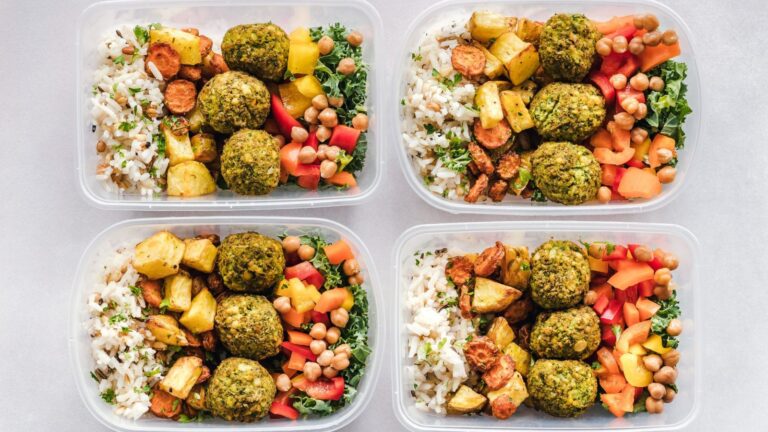
Prep is what turns a plan into dinner on the table. You do not have to cook every meal in advance. Even an hour of chopping and cooking a few base ingredients makes weeknights dramatically easier.
If you want the full step by step version, our guide on how to meal prep for the week in two hours includes a minute by minute schedule.
Three levels of meal prep
- Level 1, ingredient prep (30 to 60 minutes): Wash and chop vegetables, shred cheese, mix spice blends and portion snacks.
- Level 2, component prep (60 to 90 minutes): Cook a big batch of rice, brown ground meat, roast a tray of vegetables, hard boil eggs and make a sauce.
- Level 3, full meal prep (90 to 120 minutes): Assemble casseroles, make a soup, portion lunches and build freezer meals.
Most busy families do best with Level 1 or Level 2. Cooked components can be mixed into different meals, so the week does not feel repetitive.
A simple Sunday prep checklist
- Start rice or another grain on the stove or in a rice cooker.
- Put a tray of chopped vegetables in the oven to roast at 425°F for 25 to 30 minutes.
- While those cook, brown 1 to 2 pounds of ground meat with onion and garlic.
- Wash and chop raw vegetables for snacks and salads. Store them in containers with a paper towel to absorb moisture.
- Hard boil a dozen eggs for breakfasts and lunches.
- Cool everything for no more than 2 hours, then label and refrigerate.
Amelia’s tip: Prep in the order of longest cook time first. Grains and roasted vegetables go on before anything else, and you chop and clean while they cook. It is the easiest way to fit everything into one hour.
Kitchen setup that makes planning and prep easier
A little organization goes a long way. Keep containers, lids and labels in one spot, group pantry items by type and put the oldest items in front so they get used first. If space is tight, our guide on organizing a small kitchen with no pantry has practical layouts.
How long do prepped and leftover foods last?
Food safety is the part of meal planning people skip, and it matters. Follow mainstream USDA style guidance: refrigerate cooked food within 2 hours (1 hour if it is above 90°F outside), keep your fridge at 40°F or below and your freezer at 0°F.
Refrigerator and freezer storage times
| Food | Refrigerator (40°F or below) | Freezer (0°F) |
|---|---|---|
| Cooked chicken or turkey | 3 to 4 days | 2 to 6 months for best quality |
| Cooked ground beef or taco meat | 3 to 4 days | 2 to 3 months for best quality |
| Cooked rice and pasta | 3 to 5 days | 1 to 2 months for best quality |
| Soups and stews | 3 to 4 days | 2 to 3 months for best quality |
| Roasted vegetables | 3 to 4 days | Up to 2 months (texture softens) |
| Hard boiled eggs (in shell) | Up to 7 days | Not recommended |
| Chopped raw vegetables | 3 to 5 days (varies by vegetable) | Blanch first for best results |
Frozen food kept at a steady 0°F stays safe indefinitely. The time ranges above are about quality, since flavor and texture slowly decline.
Safe cooking and reheating temperatures
- Cook chicken and turkey to 165°F.
- Cook ground beef and pork to 160°F.
- Cook whole cuts of beef, pork and lamb to 145°F, then rest 3 minutes.
- Cook fish to 145°F.
- Reheat all leftovers to 165°F, and bring soups and sauces to a rolling boil.
An instant read thermometer is one of the cheapest, most useful tools in a busy kitchen. It removes the guesswork and helps you avoid dry, overcooked chicken.
Smart storage habits
- Cool quickly. Divide large batches into shallow containers so they cool faster in the fridge.
- Label everything. Write the food and the date on masking tape. It takes ten seconds and prevents mystery containers.
- Freeze flat. Lay soups, sauces and cooked meat flat in freezer bags. They stack neatly and thaw faster.
- Thaw in the fridge. Move tomorrow’s freezer meal to the fridge the night before. Never thaw meat on the counter.
- First in, first out. Put new groceries behind older ones so nothing gets forgotten.
What are the most common meal planning mistakes?
Most people who quit meal planning do it in the first month. Usually it is not the idea that fails, it is one of these fixable mistakes.
Planning too many new recipes
Trying four brand new recipes in one week is a recipe for burnout. Stick to one new meal per week at most, and fill the rest with dinners you already know.
Ignoring your real schedule
If Wednesday is soccer practice until 6:30, a lasagna from scratch is not happening. Match the meal to the night, and keep two “emergency” meals in the pantry or freezer, like frozen ravioli and jarred sauce or eggs and toast.
Forgetting breakfast, lunch and snacks
You do not have to plan these in detail, but add the basics to your list. Running out of bread or yogurt mid week often triggers an extra store trip and impulse buys.
Making the system too complicated
Color coded spreadsheets are fun for about two weeks. If your system feels like a chore, simplify. A notebook page with seven lines works just as well.
Not involving the family
Ask each person to pick one dinner a week. Kids are more likely to eat a meal they chose, and older kids can help cook it. It also takes some of the planning load off you.
How can you keep meal planning going long term?
The families who stick with meal planning treat it like any other routine, such as laundry day or paying bills. It becomes automatic after a few weeks.
- Recycle your plans. Save every weekly plan and grocery list. After a month, you can rotate through them with only small changes.
- Build a master list. Keep a list of your family’s top meals sorted by category: chicken, beef, meatless, soups, pasta and breakfast for dinner.
- Keep a freezer stash. Double one recipe a week and freeze the extra. In a month, you will have four backup dinners ready to go.
- Check in monthly. Ask what worked and what did not. Drop the meals nobody liked and add new favorites.
- Give yourself grace. Some weeks will fall apart. Pick up where you left off next week without starting over.
Amelia’s picks for this project
- Skroam Glass Meal Prep Containers (10 pack)Oven, microwave and freezer friendly containers for grab-and-go meals.
- Nordic Ware Half Sheet PanThe workhorse pan for sheet pan dinners, roasting and batch cooking.
- Instant Pot Duo 7-in-1Pressure cooks, slow cooks and sautés for fast weeknight dinners.
As an Amazon Associate, Amelia Jay earns from qualifying purchases. See all of Amelia’s picks
Frequently asked questions
How do I start meal planning for my family?
Pick one planning day each week, check your calendar for busy nights and choose 5 to 6 dinners your family already likes. Write one grocery list sorted by store section and shop your pantry first. Start with dinners only, then add other meals once the routine feels easy.
How much should a family of four spend on groceries per week?
It varies widely by region, diet and how much you cook from scratch. Many budget conscious families of four spend roughly $150 to $250 a week on all groceries, while dinners alone from a plan like the one above can often be covered for about $70 to $100. Track your spending for a month to set a realistic target for your household.
What is the easiest way to meal plan?
The easiest way is to use theme nights and a rotation of 15 to 20 family favorites. Each week, pick one meal from each theme, plan one leftover night and build your grocery list from there. Planning gets faster each week because you are choosing from a list you already trust.
Should I meal plan for 7 days or 5 days?
Most families do best planning 5 to 6 dinners and leaving one or two nights flexible. Plans always change, and a flexible night lets you use leftovers or handle a surprise invitation without wasting food. If you rarely eat out, planning all 7 with one leftover night works well too.
How long does meal prepped food last in the fridge?
Most cooked foods, including chicken, ground meat, soups and roasted vegetables, last 3 to 4 days in a refrigerator kept at 40°F or below. Cooked rice and pasta usually last 3 to 5 days. For meals later in the week, freeze portions and thaw them in the fridge the night before.
How do I meal plan with picky eaters?
Choose meals that can be customized, like tacos, burrito bowls, pasta bars and homemade pizza, so everyone builds their own plate. Serve at least one “safe” side you know each child will eat. Let kids choose one dinner a week, which often makes them more willing to try the others.
Meal planning does not need to be perfect to work. Start with one planning session this weekend, cook a few meals you already love and build from there. In a month, you will wonder how you ever managed without it.