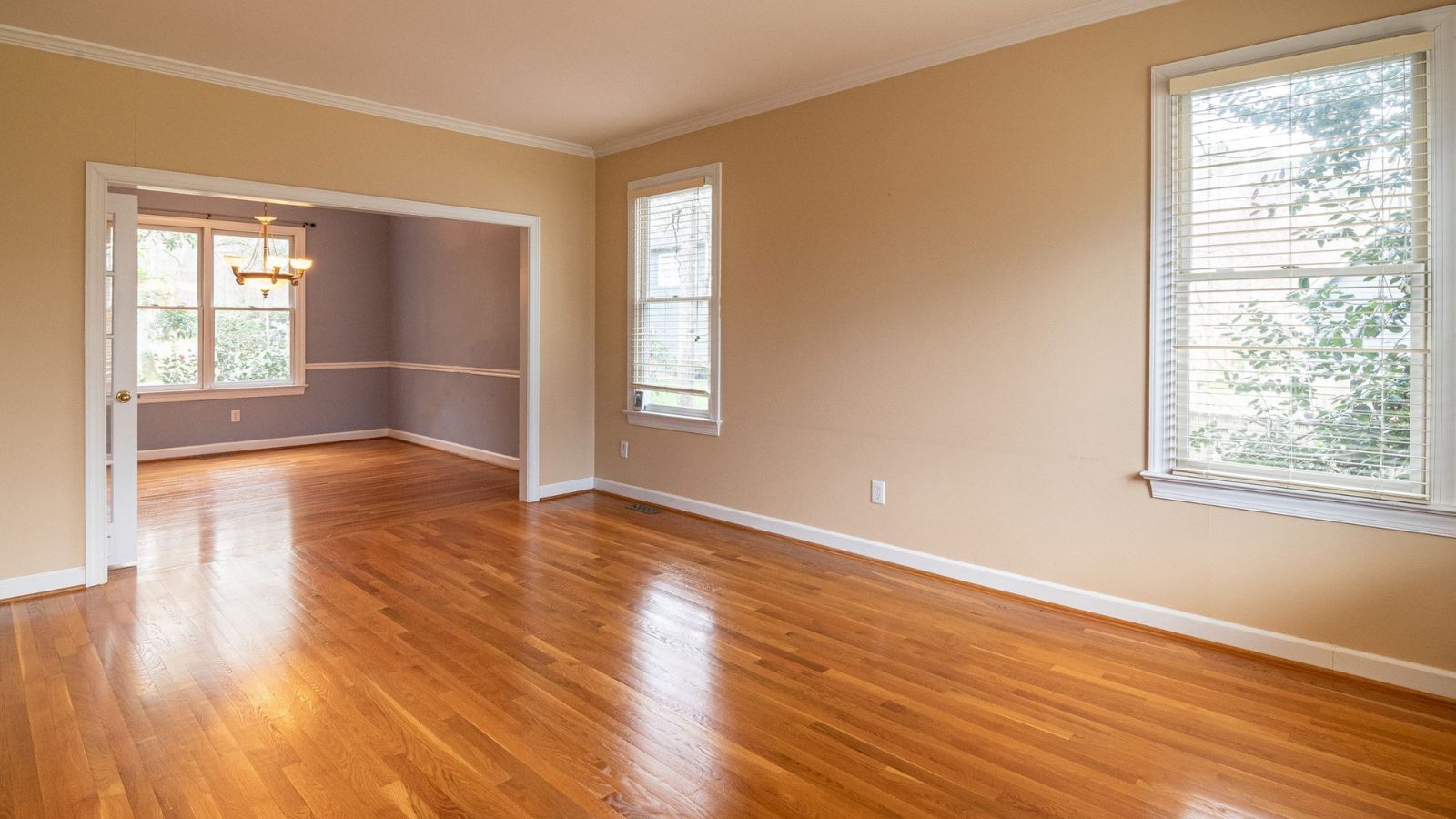
Quick answer: New flooring typically costs about $3 to $12 per square foot installed for popular options like vinyl plank, laminate and carpet, and roughly $8 to $20 or more per square foot for hardwood, natural stone and high end tile. Your total depends on the material, labor rates in your area, subfloor prep and removal of old flooring.
Flooring is one of the biggest visual changes you can make, and one of the easiest to overspend on if you do not know the real per square foot cost. Here is what each common material typically costs, what adds to the bill, and how to estimate your own project.
Updated October 2026
Key takeaways
- Luxury vinyl plank and laminate are usually the most budget-friendly hard floors, often around $3 to $10 per square foot installed.
- Solid hardwood and natural stone typically cost the most, often $8 to $20 or more per square foot installed.
- Installation labor often adds roughly $1.50 to $8 per square foot depending on the material.
- Buy 5 to 10 percent extra material (more for tile and diagonal layouts) to cover cuts and waste.
- Removal of old flooring, subfloor repairs, trim and transitions can add a meaningful amount, so ask for them in every quote.
How much does flooring cost per square foot?
These are typical installed ranges, meaning material plus professional labor. Costs vary by region, product quality and the condition of your subfloor.
| Flooring type | Material only (per sq ft) | Typical installed (per sq ft) | Best for |
|---|---|---|---|
| Sheet vinyl | $1 to $3 | $2 to $5 | Laundry rooms, budget bathrooms |
| Carpet | $1 to $5 | $3 to $8 | Bedrooms, family rooms |
| Laminate | $1 to $5 | $3 to $9 | Living areas, hallways |
| Luxury vinyl plank (LVP) | $2 to $7 | $4 to $10 | Kitchens, basements, whole-house |
| Ceramic or porcelain tile | $1 to $10 | $7 to $20 | Bathrooms, kitchens, entries |
| Engineered hardwood | $3 to $10 | $6 to $15 | Living areas, bedrooms |
| Solid hardwood | $4 to $12 | $8 to $20 | Living and dining rooms |
| Natural stone | $5 to $20 | $12 to $30 or more | Entries, high end bathrooms |
Use these as planning ranges. Local quotes are the only way to know your actual price.
What does each flooring type cost and why?
Luxury vinyl plank
Luxury vinyl plank is popular because it looks like wood, resists water well and often clicks together without glue. That makes installation faster, which keeps labor costs down. Thicker planks with a stronger wear layer cost more but hold up better in busy homes.
Laminate
Laminate is one of the most affordable ways to get a wood look. Many newer products are more water resistant than older versions, but standing water can still damage some types, so check ratings before using it in kitchens or bathrooms.
Carpet
Carpet is often the lowest cost per square foot for bedrooms. Remember to budget for pad, which affects comfort and lifespan, and for stairs, which are usually priced per step.
Tile
Porcelain and ceramic tile can be inexpensive to buy, but installation is slow and skilled. Large format tile, intricate patterns and heated floor systems push labor costs higher.
Hardwood
Solid hardwood can be refinished many times and lasts for decades with care. Engineered hardwood has a real wood top layer over a stable core, which makes it a good choice over concrete or in areas with humidity swings.
Amelia’s tip: Before replacing hardwood that already exists, pull up a floor vent cover and look at the edge of the boards. If they are solid wood with plenty of thickness, refinishing may cost far less than new flooring and look just as fresh.
What else adds to the cost of new flooring?
The per square foot material price is only part of the story. These extras often appear on quotes.
| Additional cost | Typical range |
|---|---|
| Removing old carpet | $0.50 to $1.50 per sq ft |
| Removing old tile | $1.50 to $4 per sq ft |
| Subfloor repair or leveling | $1 to $5 per sq ft, or more for major damage |
| Underlayment | $0.25 to $1.50 per sq ft |
| Baseboards or quarter round | $1 to $6 per linear foot installed |
| Transition strips | $20 to $60 each |
| Moving furniture | Often a flat fee, varies by company |
| Stairs | Usually priced per step |
How do you calculate how much flooring you need?
- Measure each room. Multiply length by width in feet. A 12 by 15 foot room is 180 square feet.
- Break odd shapes into rectangles. Measure each section separately and add them together.
- Add closets and hallways. These are easy to forget and can add up.
- Add a waste factor. Add 5 to 10 percent for most floors and 10 to 15 percent for tile, herringbone or diagonal layouts.
- Round up to full boxes. Flooring is sold by the box or carton, so divide your total by the square feet per box and round up.
- Multiply by your installed price. This gives you a ballpark before extras.
For example, 180 square feet plus 10 percent waste is 198 square feet. At a typical $6 per square foot installed for mid-range vinyl plank, you would budget around $1,200 before removal, trim and other extras.
Keep one or two spare boxes after the job. If a plank or tile is damaged later, you will have an exact match.
How much does it cost to floor common rooms?
| Room (approx. size) | Vinyl plank or laminate | Hardwood |
|---|---|---|
| Small bathroom (40 sq ft) | $160 to $400 | Not usually recommended |
| Bedroom (150 sq ft) | $450 to $1,500 | $1,200 to $3,000 |
| Living room (300 sq ft) | $900 to $3,000 | $2,400 to $6,000 |
| Main floor (1,000 sq ft) | $3,000 to $10,000 | $8,000 to $20,000 |
These estimates use the typical installed ranges above and do not include removal, subfloor work or trim.
How can you save money on new flooring?
- Get at least three itemized quotes. Ask each installer to list removal, prep, materials, labor and trim separately so you can compare fairly.
- Remove old carpet yourself. Pulling carpet and pad is messy but simple. Wear gloves and knee pads, and watch for tack strips and staples.
- Choose click-lock floors for DIY. Many vinyl plank and laminate products are designed for confident DIYers and can save you the cost of labor.
- Watch for sales. Flooring retailers often run promotions, and leftover lots can be a bargain for small rooms.
- Use one floor throughout. Continuous flooring needs fewer transitions and makes a home feel bigger.
- Refinish instead of replace. Existing hardwood can often be sanded and refinished for less than new flooring.
If you are renting, skip permanent flooring and look at large area rugs or landlord-approved options from our guide to updating a rental without losing your deposit. Homeowners planning a bigger refresh can compare flooring with other projects in our guide to budget home upgrades that add the most value, or pair new floors with fresh walls using our breakdown of what it costs to paint a room.
To fund the project without debt, set a savings target in a household budget that actually works. If you are considering financing, compare offers carefully or talk with a licensed financial professional first.
Amelia’s picks for this project
- Amazon Basics Microfiber Cleaning ClothsWashable cloths that grab dust and streaks with just water for most jobs.
- Cordless Electric Spin ScrubberSwappable brush heads do the scrubbing on tubs, tile and grout for you.
- Bissell Little Green Portable Carpet CleanerA compact spot cleaner for upholstery, mattresses, stairs and car seats.
As an Amazon Associate, Amelia Jay earns from qualifying purchases. See all of Amelia’s picks
Frequently asked questions
What is the cheapest flooring per square foot?
Sheet vinyl and basic carpet are usually the cheapest options, often around $2 to $5 per square foot installed. Budget laminate and entry level vinyl plank are close behind. Prices vary by region and product quality.
How much does it cost to install 1,000 square feet of flooring?
For vinyl plank or laminate, most homeowners pay roughly $3,000 to $10,000 for 1,000 square feet installed. Hardwood typically runs about $8,000 to $20,000 for the same area. Removal of old flooring, subfloor repairs and trim add to the total.
Is vinyl plank cheaper than hardwood?
Yes, luxury vinyl plank is usually much cheaper than hardwood to buy and to install. It is also more water resistant, which makes it popular for kitchens and basements. Hardwood can be refinished and tends to last longer, which some homeowners prefer.
Does flooring cost include installation?
Store prices are usually for material only. Installation is typically a separate charge per square foot, plus extras like removal, underlayment and trim. Always ask whether a quote is for material only or fully installed.
How much extra flooring should I buy?
Buy 5 to 10 percent more than your measured square footage for most floors. For tile, diagonal or herringbone patterns, plan on 10 to 15 percent extra. Keeping a spare box or two makes future repairs easy.
Once you know the typical cost per square foot and the extras to plan for, flooring quotes become much easier to read. Measure carefully, compare itemized quotes and choose the material that fits how your household actually lives.